
THE original Space Elevator site, Marc Boucher’s Space Elevator Reference, is undergoing a renovation. In addition to a spiffy new logo, we learn that;
“…the site will be changing it’s current format which is more news oriented with some reference material to a wiki/mashup platform allowing for greater participation and dissemination of reference material. I anticipate having the site online before the upcoming Space Elevator Conference. So at this time I’m asking for volunteers to step forward in helping create the new Space Elevator Reference.”
Read the entire post to see what’s happening at this site…
I like the new logo Marc!
May 9th, 2008
Well, that didn’t take long. The video clip I put up of Brian Turner of the Kansas City Space Pirates appearing on the Conan O’Brien show has been taken down due to “Copyright violations”. I don’t know why - there’s a ton of other Conan video clips up on YouTube. Maybe someone from another Climber/Power-Beaming team complained because they thought that Brian was getting too much publicity :) Anyway, you can go to the Conan O’Brien website and see the clip. Don’t delay though, it probably won’t be up there for long either. Go to this website, navigate to the “May 2nd” episode and then select on “Brian Turner”.
I received a couple of photos from Akira Tsuchida, Captain and Fearless Leader of team E-T-C, showing the Japanese translation of the Edwards-Ragan book “Leaving the Planet by Space Elevator” on sale at a Japanese bookstore. When Akira first wrote me about this, he exclaimed that the book was “Laying on it’s side!!” I had no clue why that was important until he explained to me that this was reserved only for books with multiple copies - a position of prominence I’m told. On a related note, I received an email from Phil Ragan, the co-author of the book. He emailed me to say; “I just saw your spaceelevatorblog.com web site for the first time, sorry I hadn’t come across it earlier. Thanks for the supportive words about our book! The intent was to increase the public awareness of the project and help it along in some way. We’ve just had the Japanese version of the book released and it is in the stores in Tokyo and available at amazon.com.jp and its prompting the book publisher to consider taking us up for a second edition in English, which would be great if it happens.” So, way cool…
On the Spaceward Foundation website, there is an “Artist’s rendition” (complete with Homer Simpson) of a mockup of what the 2008 Space Elevator Games venue might look like (if it’s held at Meteor Crater in Arizona). This mockup will be on display at this year’s ISDC and SEC2008 (and probably some other venues too).
Speaking of ISDC, Ben Shelef of the Spaceward Foundation will be there (with the aforementioned venue mockup) along with representatives of some of the teams entering this year’s Space Elevator competition. I may make it there myself - we’ll see…
And, speaking of the Space Elevator games, the observant may note that the date for these games (posted on the sidebar of this blog) has been changed from September 8th to September 26th-28th. The September 8th date was never really ’set in stone’ - it was just a target date. The 26th-28th dates (with qualifications beginning on the 23rd or 24th) is a much more firm date.
And finally, just another example of how the term “Space Elevator” is entering into the everyday lexicon. In this article, the author is complaining about the rise in diesel fuel prices saying; “Sure, fuel spikes aren’t new, but this time it’s less of a roller-coaster ride than a space elevator.”
(Gas price sign from here)
(For all pictures, click on the thumbnails for a larger version)
May 7th, 2008
This was Conan O’Brien’s joking response to Brian Turner’s description of the “Space Elevator highway(s) to Space”.
Brian Turner of the Kansas City Space Pirates appeared on Friday night’s Conan O’Brien show. I thought the interview went well and that Brian handled himself very commendably. It’s not easy, being interviewed live like that. Many, many years ago, I had one very forgettable instance in a TV interview and I am eternally grateful the TV network chose not to air my mumblings…
Clearly Conan understood the concept of a Space Elevator; either he knew it beforehand or had been coached prior to the show. His questions were accurate and Brian handled them well. There was one comment by Brian where I thought he had clearly misspoke - describing the probable site of a future Space Elevator port as being in the Pacific Ocean, “south of Kansas City.” But I looked on a globe and darned if it isn’t true…
My only complaint would be that they did not mention the Space Elevator Games at all. I think this would have given the concept much more credibility; NASA putting up 4 million dollars in prize money and that what Brian’s team (one of many in the event) is building is an entry for this competition, not a real Space Elevator. But still, Conan O’Brien…
Well done Brian!
.
(Update 07MAY08 - YouTube has taken down the video. To see it, visit the Conan O’Brien website, navigate to the May 2nd episode and then select ‘Brian Turner’. Do it soon, though - I don’t think episodes stay up very long on this site either…)
May 3rd, 2008
I don’t like to write about the same thing twice, especially in the same week. However, this is just too cool not to…
On Friday, May 2nd, Brian Turner, Captain and Fearless Leader of the Kansas City Space Pirates is scheduled to appear on the Conan O’Brien show (11:30pm Central - I don’t know what time in other time zones - look it up).
Oh, God of TIVO, please let my recording of this show be without troubles. If you grant me this boon, I will promise to worship you forever and ever…
(Thumbnail from here - click on it for a larger version)
May 2nd, 2008
Dr. Brad Edwards, the ‘father’ of the modern-day conception of the Space Elevator, has written a very interesting article in the latest issue of the TRUMPF newsletter (available here).
In this article, Dr. Edwards talks about how lasers can be used, not only to power the Climbers that will travel on the Space Elevator, but also may be involved in the creation of the carbon nanotube fibers that the Elevator will be built of. From the article:
“A powerful laser is focused onto a mixture of carbon and metal catalysts vaporizing the mixture into the surrounding 1200 °C furnace. The metal catalyst forms nanoparticles where the carbon atoms adhere and move about to combine into rings and then graphite sheets. These sheets wrap around the catalyst particle and form a tube that begins to extend out as more carbon atoms are added to the end where the catalyst sits.”
A truly interesting article - highly recommended.
TRUMPF, of course, is the company which is providing laser power and laser-power-expertise to no less than five of the contestants in this year’s Space Elevator Games (chronicled here, here, here, here and here).
(Hat tip to Dan Leafblad of the Kansas City Space Pirates for pointing out this article to me - thanks Dan!)
May 1st, 2008

As has been mentioned in this blog (and elsewhere, I’m sure), DILAS supplied the laser the USST team used in their near-prize-winning run at the 2007 Space Elevator Games.
In this article in the online publication Laser Focus World, DILAS (Tucson) General Manager & Vice-President Dr. Georg Treusch discusses this application from the vendor’s viewpoint. It’s a somewhat technical and very interesting article. We learn, for example, that DILAS “…supplied the best performer in 2007 with a power-beaming source on very short notice (three weeks), using a new modular diode-laser-based power beamer that is applicable for both terrestrial as well as spaceborne applications.” The ‘best performer’ referred to was USST.
Dr. Treusch also discusses what is planned for 2008:
The new design for the power beamer considers various approaches from different teams using low-cost Si- or highly advanced GaAs-based photovoltaic (PV) cells. Material choices, PV cell, and beam characteristics are up to the competing teams; the challenge simply sets the distance and minimum average rate of climb. Each team is likely to have its own approach with power-beaming systems ranging from 2.5 kW to values above 10 kW.
The wavelength for the power-beaming sources will likely be between 800 and 980 nm. High-power diode lasers have efficiencies greater than 60% and power levels greater than 100 W per 10 mm bar. It is a happy coincidence that Si and GaAs photocells are more efficient at this spectral range compared to wavelengths above 1 µm, which is the spectral domain of fiber and disk lasers.
A very interesting article - highly recommended.
Also, while searching through this publication’s archives, I found this article. While it focuses on delivering power to photovoltaic cells via fiber-optics, it also discusses delivering power to photovoltaics via ‘free space’; i.e. using light (or lasers). It also briefly mentions the 2005 Space Elevator competition.
I guess I’ll have to keep watch on this publication, too. So many articles, so little time…
April 30th, 2008
Akira Tsuchida, Captain and Fearless Leader of Team E-T-C, emailed me to let me know that the book by Brad Edwards and Philip Ragan, Leaving the Planet by Space Elevator, has now been translated into Japanese and is available at Japanese book stores.
The translation of its title into Japanese results in 宇宙旅行はエレベータで (The Space Travel by the Elevator).
Akira has also told me that this book has been placed in a position of prominence in the bookstores; with multiple copies being placed on a cart at the front of the store.
And, for those of you who would rather order it online, it’s available at Amazon.com.
(Click on the book cover thumbnail for a larger version)
April 29th, 2008
We have a new competitor into this year’s Climber/Power-Beaming event, Team Nippon, from Japan. It’s Captain and Fearless Leader, William Rieken, kindly consented to answer some questions I sent to him via Email:
[Space Elevator Blog - SEB] - Please tell us a bit about yourself. Are you a permanent resident or citizen of Japan or are you there in a work-related or study-related capacity?
[Team Nippon - TN]- I have lived in Japan for about 26 years or so. I am still a U.S. citizen. I enjoy the peaceful life of Japan. I have worked in several universities and government labs in Japan over the years. I am doing my Ph.D. at the Nara Institute of Science and Technology in Nara Japan. I have been working on the development of technology related to search and rescue for my Ph.D. studies.
[SEB] - When did you first get introduced to / interested in the concept of a Space Elevator?
[TN] - I have been following the Space Elevator development and competition since they first became known. As a person with considerable interests in technology and science and the progress and the sustain ability of mankind I track and become involved in technological developments and the policy all over the world.
[SEB] - How did you hear about the Space Elevator competition?
[TN]- As I said, I have been watching the competition from afar from the beginning. I got interested in doing this competition at this time, because right now I am waiting for my acceptance letter from a journal. My final requirement for graduation. Looking for a new challenge, I did some design work on a pre concept vehicle and thought this would be something important to participate in, that could contribute towards the future. My team and I and my sponsors all believe that by doing work such as this benefits everyone in the world in the long run.
[SEB] - Please tell us a bit about your team and your teammates.
[TN]- Dr. Kawashima, a consultant, handles the laser segment at his laboratory. Dr. Kawashima has much experience in “power beaming” technologies over a kilometer range, so is perfect for my team. We have another physicist consultant, who advises in laser and optical cell coupling technologies. Nijo, an Indian from india helps in the Cad work and is very good at it. I work on everything else, system design, engineering and integration as well as logistics. Most of the big stuff is handled by my sponsors and their employees. The design, construction and engineering of the climber is done by myself. The team is small by design. I have built and managed many teams over the years and have found small teams to be the most effective. Teams need to be functional systems which can carry out the necessary steps to complete the work. When teams get large, you get into a lot of problems and then they become difficult to control. So a team only needs as many operators as required to accomplish the goal and no more. So I have a small, but very focused and experienced team. I am expecting to expand the team by three more people over the course of the project as their need arises.
[SEB] - I’m sure you’re fully aware of the demands of this year’s competition (1 KM high – 2m/sec). What type of power-source does your team intend on using to power your Climber?
[TN]- We are using KW range lasers like most everyone else. It has been the most difficult portion of the project because of the very high power requirements, weight of components and special logistical requirements. In my opinion, NASA should have provided the laser system because its requirements greatly limits the ability of teams to compete. Laser systems in these power ranges and multi-million dollar price range takes a lot of expertise and a high level of knowledge to operate safely. This creates a kind of “haves and have nots” syndrome. Eventually we will have to move our these lasers to the U.S. for the competition. Moving the climber system is a piece of cake, but when you throw in KW lasers, that is a lot of work, that we are looking forward too.
Thank you William - and a hearty welcome to you and your team to the competition!
The more competition, the better of course (though the other teams may not feel that way
). And, having another non-North-American competitor is a big plus. I just wish we could get some European team (or two) to join the fun - maybe next year…
April 28th, 2008
Nice music, nice video effects and, ~5 minutes into the video, we even see a Space Elevator concept
April 27th, 2008
On the current edition of Dr. David Livingston’s The Space Show, Dr. Michio Kaku and Dr. Bob Krone are interviewed.
It’s a wide-ranging interview, with many topics discussed, among them:
“As for discussing space travel, Dr. Kaku pointed out the problem of the high cost of space access. He was asked if we needed breakthrough advanced propulsion to give us low cost space access, could we do it through the space elevator which he talks about in his book, or could space tourism or space solar power be an economic driver leading to a significantly higher launch rate which would enable commercially attractive launch prices.”
It’s a very interesting interview and can be accessed here. Note that this is an .mp3 file and must be downloaded to be played. It’s > 50MB, so… patience is a virtue 
April 26th, 2008
I received the following very exciting email from Brian Turner, Captain and Fearless Leader of the Kansas City Space Pirates:
Big news. We have landed National Instruments as a sponsor. For those of you who don’t know them, they make the coolest automation software out there (LabView) and all the hardware to go with it. Having high quality software and hardware will make this task far easier than it would have been otherwise and National Instruments is second to none.
Drum roll please ….
I am going to be interviewed about the Space Elevator on NBC’s Late Night with Conan O’Brien.
Date Friday May 2nd
Time: Very late. After the Tonight Show - Around 11:30 in Kansas City
I have read repots estimating 2 million viewers. Needless to say I am excited and nervous. I am not sure how much the space elevator has been discussed on national network TV but this is clearly a big opportunity. Hope I don’t blow it.
Brian Turner
Captain
KC Space Pirates
I’m sure you won’t blow it Brian, and this is tremendous news, both for you and your team and for the Space Elevator concept in general.
I’m putting out a call to everyone to please record this show. I have a TIVO, but it’s over 5 years old and is starting to act up - I’m not 100% sure of it anymore.
Conan O’Brien - way cool…
(Picture of Conan from here. My favorite Conan O’Brien website here.)
April 25th, 2008
At last year’s Space Elevator Games, a group called Bitter Jester Creative, Inc. was invited to film the games from a human interest viewpoint. The first fruits of this effort from the team of four that were at the games are now online.
Nic DeGrazia, one of the Bitter Jester Creative team members said this in an email he sent to me:
“The second and third clips in that screening room are two scenes from the feature. One is an introduction of some of the characters in the movie, the other is sort of a sample dramatic scene from one of the Space Pirates failed attempts to claim first place.… please know that this is a work in progress and as is, it’s a bit out of context. This is just to give an example of the production value, content, etc. The full feature would obviously have much more setup and explanation.”
If you visit this link at their website, you can see these two clips.
These are really well done, especially (IMHO) the first one.
Enjoy…
(The picture thumbnail is from the first clip - interviewing Bryan Laubscher - one of several people interviewed during the clip. Click on it for a larger version, or, better yet, watch the videos)
April 24th, 2008
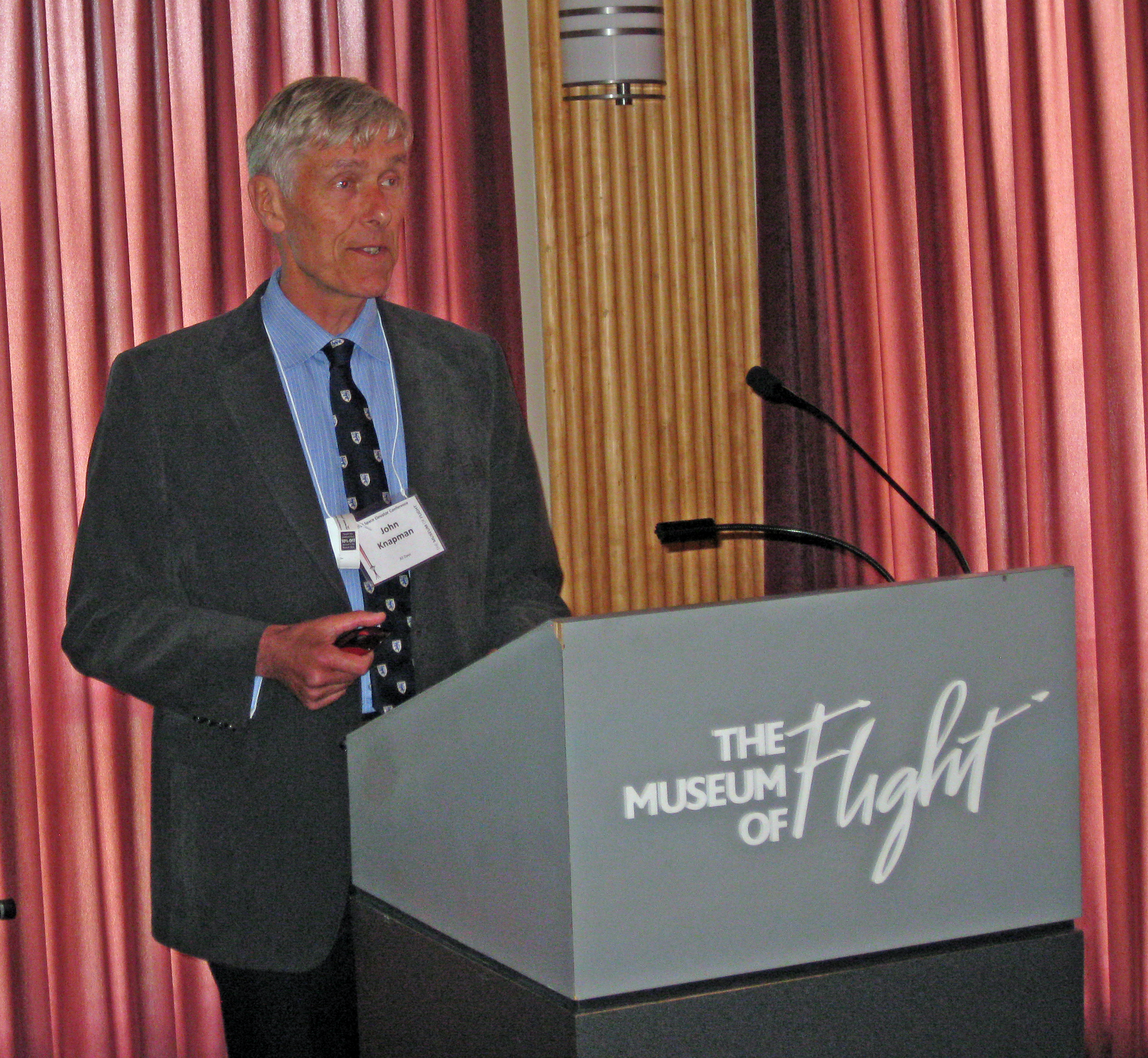
On the LaserMotive blog, Tom Nugent writes about Jordin Kare’s appearance at the recent Space Access ‘08 conference. He also mentions that the LaserMotive team is not only interested in the Climber / Power-Beaming competition at the Space Elevator Games, but;
“We’re also a team working to bring laser power beaming into the realm of commercial products. For now we’re concentrating (as it were) on the Elevator:2010 competition, but we’re also looking beyond it. More on this point later.”
We’ll be interested to see what their long(er) term goals are… Finally, we also learn from the blog entry that Tom and his wife Elizabeth are expecting another addition to their family - congratulations!!
On a laser-related note, UK reader Tony Wright emailed me a link this story (thanks Tony!). It seems that a team of French and German scientists are now testing a laser (in New Mexico for some reason) which may allow them to generate lightning bolts on demand. Outside of being cool (and a little scary), they discuss a possible use for such a device; draining the electricial energy from a storm before it can cause damage. Lightning is, indeed, one of the possible causes of harm to a future Space Elevator and is, in part, why certain areas of the globe are less hospitable for siting the Elevator. One could imagine such a device being situated near the Elevator; ready to ‘draw off’ possibly harmful electrical energy from a local weather pattern.
I suggest reading the entire story - it’s quite interesting
(Zeus cartoon from here - click on it for the full size version)
April 22nd, 2008
Registration is now open for the 2008 Space Elevator Conference, being held in Redmond, Washington, from July 18th through the 20th.
On the Conference Website, you can now register for the conference and get contact information for nearby hotels. You can purchase access to the entire conference (including the Banquet) for only $395. Special rates are available for presenters, students, etc. But these rates go up June 1st, so don’t delay!
You can also purchase a copy of the 2007 Space Elevator Conference proceedings from the website. I’ve ordered one because at last year’s Conference, there was a very interesting “Alternative Space Elevator concept” presented. I was asked not to blog about it because of IP issues, but once the proceedings are published, it’s fair game
This information is also available in .pdf format and .doc format.
So, come one, come all, to the 2008 Space Elevator Conference!
April 19th, 2008
No comment, except, I can hardly wait for the next episode
April 16th, 2008

As most of you know, Team DeltaX came to last year’s competition with a fledgling (but real, oh so real) carbon nanotube tether. The DeltaX team is out of MIT and they are partners with Nanocomp in this competition effort.
With the experience of the 2007 Games now under their belt, I emailed Stephen Steiner of DeltaX several questions. Here are his replies (along with those of David Lashmore of Nanocomp).
1. [Space Elevator Blog - SEB] – Where do you do your actual “Tether development” work? Is it all done at the Nanocomp facilities with DeltaX people taking part? Is there a lab on the MIT campus where some/all of this work is done?
[Stephen Steiner - DeltaX] - The tether development is done both at Nanocomp and at MIT. MIT has some capabilities that Nanocomp doesn’t and vice versa. Obviously the manufacture of the raw materials is done at Nanocomp, however textiling, special processing, and tether-related research and development are done at MIT. We meet about once a month to cross-pollinate our progress.
2. [SEB] – Prior to being approached by DeltaX, had you ever heard of the idea of a Space Elevator?
[David Lashmore - Nanocomp] - Yes, I have known about the concept for many years.
3. [SEB] – Why are you participating in this challenge? What benefits do you see accruing to Nanocomp for doing so?
[Nanocomp] - The main reason for participating in this challenge is to help us improve our product. Winning this challenge will require an extraordinary material, not only strong on a small scale but one that is more or less free of defects over a large scale. We have already demonstrated yarn production rates of 150 m/hour and made about 400m continuously. Our near term yarn goals are 1 km at about 4 N/tex breaking strength (about 8GPa) tested at 10 cm gauge length.
4. [SEB] – How are you goals different (if they are) between what you accomplished in the 2007 Games vs. what you want to accomplish this year?
[DeltaX] - Our goals for 2007 were to qualify with an all nanotube-based tether, which we did. The knot failure really didn’t bother us–we were just glad to come in with a tether that met the competition criteria. In fact, our competition tether was made of mostly scrap nanotube yarn (albeit kilometers of it!)–the good stuff stayed at MIT for research and development. A year prior to the 2007 competition, even just qualifying with an all-nanotube specimen would not have been viable for us so we saw the feat as a significant technological step forward.
Our goal for 2008 is to demonstrate a tether which is at least competitive with aramid fiber composites. That said, we have some research in the pipeline that very well may push us into the range of a winning tether.
5. [SEB] – The Cambridge University team of Windle/Motta recently said that they are going to try and compete at this year’s Tether challenge. This is the team, of course, that recently announced the creation of nanotube fibers measured at ~9 GPa. In a DeltaX blog entry dated October 24^th , 2007, (a few weeks before the Cambridge announcement) you wrote; “An article appeared yesterday on the BBC’s website talking about Alan Windle’s group at the University of Cambridge, which is spinning nanotube yarns. A very interesting read–related to what we’re doing. Although the stuff we have in the works blows away Windle’s yarns.” Does this mean that you’re confident about your chances in the competition, even if a Cambridge team does compete?
[DeltaX] - We have some very exciting technology developments underway which boast similar numbers. Whether or not we manage/choose to scale them up to a tether for the competition this year is yet to be determined. We do know that anything a Cambridge, UK team would submit would at best be comparable in strength to tethers we have developed (although their mastery of knot science may be superior!). Some of the numbers which have been circulated by the media regarding nanotube yarn strength are actually strengths over the gage length of a yarn–in the case of the state of the art of nanotube yarns this generally means sub-millimeter lengths. This is because there are defects (imperfections) in the yarn’s microstructure which statistically manifest themselves over lengths greater than about one millimeter. In terms of macroscopic yarn strength we don’t believe their yarns are stronger. It is important to note, however, that strength isn’t the only parameter here that needs to be met.
Scale is also an issue, and Nanocomp is unmatched in terms of yarn production capacity. We of course would welcome their team to the competition and would be delighted to see a technological breakthrough, from any team, which advances the Elevator cause. We have the utmost respect for Prof. Windle and his group and greatly admire the work they have done.
6. [SEB] – If this is not revealing a trade secret, how will you get your tether fibers to “loop”? Last year, you used a knot – will you be doing something like that again or will you have another way to accomplish this?
[DeltaX] - We have two fundamentally different starting materials with which we go back and forth developing. We have textiles which are manufactured in loop form to start with (the person-sized fabrics you may have seen on the Internet) and we have yarns which are made linearly. Our yarns are generally stronger than our textiles, but it’s tricky to get the yarns into a loop. This said, our current research focus could make both problems irrelevant so we’ll have to see what pans out by competition time.
7. [SEB] – Recently you announced the ability to create 3’x6’ nanotube sheets. Are the nanotubes in these sheets made the same way as the nanotubes in the tether or is the process completely different?
[Nanocomp] - The nanotubes in both our non-woven sheet products or in our yarn products are created in similar ways. We can select whether our tubes are predominately single walls of approximately 1 nm diameter plus or minutes about 10% or whether they are dual walls of about 3 to 5 nm in diameter.
8. [SEB] – On the DeltaX website, you say the following: “We competed in the 2007 Spaceward Games in Salt Lake City, Utah, where we proudly lost, but qualified to compete, with a tether made out of 100% carbon nanotubes (mostly single-walled, but with some double-walled content).” For the uninitiated (including myself), can you explain the difference between “single-walled” and “double-walled” carbon nanotubes and tell us which is better/stronger and why?
[DeltaX] - A single-walled carbon nanotube is a hollow, cylindrical filament, generally between .5 and 1.5 nm in diameter. A double-walled carbon nanotube is basically two concentric single-walled carbon nanotubes, the outer wall being larger in diameter than the inner wall. Double-walled nanotubes can be several nanometers in diameter. Regarding which is stronger, this is a matter of some debate. As far as individual nanotubes go, the specific (weight-normalized) strength of a single-walled carbon nanotube is higher than that of double-walled carbon nanotubes as I understand it. It depends, however, how you make the measurement of course! Individual nanotubes are very difficult things to grab and do a tensile strength test on. As far as macroscopic materials goes, it doesn’t make a whole lot of difference for us right now, since the primary strength-bearing microstructures in our materials are composed of many close-packed nanotubes.
As to why our materials are “mostly single-walled, but with some double-walled content”, the nanotube growth process is inherently statistical and as such a distribution of nanotube diameters results–meaning our materials are mostly single-walled carbon nanotubes but have some double-walled carbon nanotubes in them. But generally it is our understanding that starting materials made of single-walled carbon nanotubes are what we want to aim for.
Thanks very much gentlemen - a very interesting set of responses (and I, for one, learned some things I didn’t know before)!
One small word of advice; if you’re looking for expertise in ‘knot-tying technology’, Bryan Laubscher is the guy to see :) His tether entry in the 2006 Space Elevator Games (’Team Fireball’) did part, but it wasn’t at the knot…
April 15th, 2008
I received this email update from Brian Turner, Captain and Fearless Leader of the Kansas City Space Pirates:
“In the spring-time a pirate’s fancy turns to thoughts of… packages, showing up via UPS. That’s right, It’s build season and while I wait impatiently for said packages I thought I would fire off a long overdue update.
As I mentioned we are receiving and assembling parts. I am not sure that we are still ahead of schedule but father time is not breathing down our necks just yet. We have been a little distracted by various things including a national television engagement that is coming up (more on that later).
Our testing in Detroit went quite well and our photo cell vendor is working on our order. If we can get the cells to match projections in the competition we should be able to make good on the 5 m/s goal I set out a few months back.
We have a major new sponsor to announce. Thorlabs. They will be providing most if not all of our optical needs. This covers one of the major expenses we were facing so I am exceptionally excited about this one. We also have a major automation vendor in the works for sponsorship, but it is not quite in the bag yet, so I will leave that announcement for later.
We also have added an expert machinist to the team. This in an important step for the precision machining needed to make the optical actuators needed to aim the laser.
Brian Turner
Captain,
KC Space Pirates”
As this team has well-proven in the past two competitions, they are a serious threat to win it all - I’m going to be very interested to see how their foray into laser-power turns out.
April 14th, 2008
On this date, April 12th, in 1961, Soviet Cosmonaut Yury Alexseyevich Gagarin became the first human to travel in space. Yuri’s Night celebrations are hosted around the world on this date each year to celebrate this event. Congratulations Comrade!
Another anniversary of note on this date was the maiden flight (in 1981) of the first Space Shuttle, Columbia.
And finally, this date (in 2018) was the initial hoped-for ’start of service’ date for the LiftPort Space Elevator. Alas…
(Picture credits: Yuri Gagarin via Tass/Sovfoto. Columbia via NASA. Click on the thumbnails for slightly larger versions)
April 12th, 2008
I received an email today from Michael Remington, Captain and Fearless Leader of Team Astroaraneae (the reigning champs in the Space Elevator Games Tether event):
“I would like to notify you of an upcoming dinner event, hosted by the AIAA Sacramento Section. The highlights include a lecture on the Space Elevator (by moi) and a sneak peak of a documentary recently submitted to the Seattle Film Festival: The Mighty Tether (Producers: Kane Wilke & Jeremy Dinovo). It will be held in the Sacramento area, on the evening of April 24th 2008. Details are included in the attached flyer or can be found at: http://aiaasacramento.com/
I would appreciate your letting the Space Elevator community know about this upcoming event, by e-mail or by a mention on your websites (where appropriate); and would encourage any and all of you interested in attending to RSVP, at your earliest convenience (per flyer). A large turnout is expected, and our venue (California Aerospace Museum) has limited seating.
Best regards,
Michael Remington
Team Leader, Team Astroaraneae”
In the flyer announcing the event, the documentary is described as “It distills, and elicits the very essence of technological innovation as seen through the eyes of those toiling at the Space Elevator.”
This is all good. I wish I was in the Sacramento area on the 24th, but alas I am not. However, I’m looking forward to the release of this documentary and will publish details about it as soon as I have them.
April 12th, 2008
Bert Murray, Captain and Fearless Leader of the NSS Space Elevator Team, emailed me to let me know that their team recently did a demo for a BBC news/film team.
The following is a note posted on the News section of the Team website:
“We had a lot of activity this weekend! The BBC flew in from London to film our prototype test of the climber. We started the day filming the battery operated climber which shot up the tether and broke. Then, we went outside and used a 10,000 watt spotlight to power the solar climber. We were pretty nervous, but it was a success. The climber ascended 100 feet up the tether. The BBC was happy with their material from the shoot, and we are looking forward to the airing of the BBC show. Here is a video from the day.”
Incidently, if you didn’t know that the NSS team had their own website, well neither did I
In that News post, there is a very cool video of the BBC shoot and the climber test (complete with European Dance/Trance music). What is even cooler is that NSS has also posted a video slideshow, showing team members, close-ups of the Climber, etc., also accessible from their website’s News section.
I’ve taken the liberty of posting two photos from the Slide Show, below. Click on them for the full-size version (or, better yet, visit their website to see the whole selection - I mean, where else can you register to win a ‘Celestial Design’ Quilt in a raffle?).
On the left, you can see a a closeup of the underside of the Climber in flight. The underside is illuminated with a 10 kw spotlight; the illuminated cells show clearly.
.
.
.
Here is a close-up of the Climber itself. You can clearly see the steel cable it is designed to ascend (a major change from previous competitions in which a ribbon was used).
.
.
Finally, I pulled this photo from the video. It shows the 10 Kw spotlight used to power the climber being ‘tuned’ on the side of the building. It kind of reminds me of this video of the Kansas City Space Pirates when they were ‘tuning’ their mirrors…
.
.
April 11th, 2008
Yes I know that there have no posts here for a few days now. No, nothing’s wrong (thank you to those who emailed me, asking if all was well), there just hasn’t been much to post about.
One of the things I have been doing is some investigation into the “wobbly Space Elevator” (non?) problem. I’ve been corresponding with Dr. Brad Edwards and Dave Lang about this (as well as reading what Blaise Gassend had to say about it) and am going to pony up the $31.50 to read the original paper by Lubos Perek to see what ignited all the fuss. At some future point, if I think I have something to add to this discussion, I will do so.
Glen Phillips is in town Friday night - I look forward to this concert with great anticipation.
Planning is still ongoing for this year’s Space Elevator Games. The two biggest changes from previous games are, of course, the length of the racecourse (now 1km) and that instead of a ribbon, the climbers will have to be ascending/descending a steel rope. The chances that anyone will attempt this competition with a power source other than a laser are somewhere between zero and nil.
Planning is also ongoing for the 2008 Space Elevator Conference. A full team has been assembled to organize this event and I, for one, am truly looking forward to it. It will also be very interesting to see how much Microsoft is truly interested in this idea. I had blogged earlier about Bryan Laubscher’s talk at Microsoft - perhaps this is another way that they are going to compete with Google?
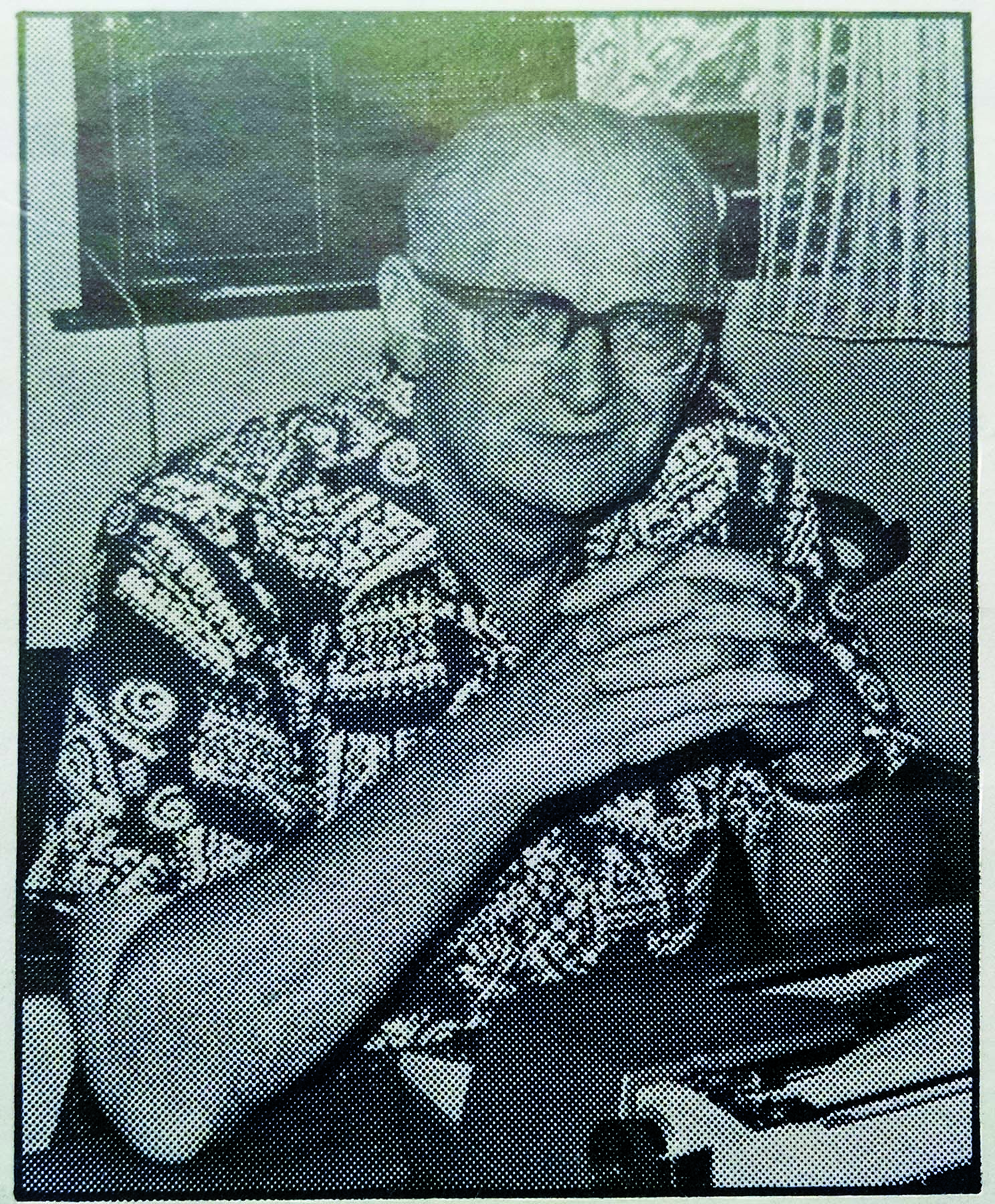
The picture thumbnail, above, is probably one of the last (if not the last) pictures of Sir Arthur C. Clarke and was provided as part of a story by Saswato R. Das. Click on it for a slightly larger version (or access the story, of course).
Finally, about 30% of me thinks that this is a hoax…
April 9th, 2008

One week from today is the anniversary of Yuri Gagarin’s historic trip into space, the first human to venture into this realm. Each year, this anniversary is celebrated by a loose network, ‘Yuri’s Night’. This network attempts to organize parties all over the world in honor of this event; the idea being, of course, that we are one race and we should all be celebrating this achievement.
So, if there is a party in your neighborhood (which you can locate on the Yuri’s Night website), or are feeling really ambitious and want to organize one, have a beer and toast Comrade Gagarin.
April 5th, 2008
The Queen’s Space Engineering Team today announced more team position fulfillments:
“Congratulations to Justin Charbonneau, Jason Saldanha, Max Miller-Blanchaer, and Cameron Hurst, who will be filling in the positions of President, VP Mechanical Design, VP Electrical Design, and VP Power Beaming.”
Read the full post here. Also of note is their new web layout.
April 4th, 2008
Artist Maciek Rêbisz sent me today a link to his artistic tribute to Sir Arthur C. Clarke. It’s a beautiful picture, and a particularly European one…
Maciek is also the person who sent me the Polish Translation (Winda Kosmiczna) of ‘Space Elevator’.
Thanks Maciek!
(Photo thumbnail is from Maciek’s work)
April 4th, 2008
As most of you undoubtably know, there have been many, many tributes to Sir Arthur C. Clarke in all forms of media. My own modest effort was here.
A few of these tributes, however, I think are especially noteworthy, and are the subject of this post.
The first is a tribute from Yuri Artsutanov, including him singing “Happy Birthday” to Sir Clarke (in English yet!)
.
This next YouTube effort is a tribute from his adopted homeland, Sri Lanka.
.
Jeremy McGovern from Astronomy Magazine’s Astronomy.com gives his tribute here.
.
Mat Kaplan at The Planetary Society gives his (and others) thoughts here. Mat’s show continues to be, IMHO, the best Science Internet/podcast show out there. If you’re unaware of his shows, or just haven’t been listening lately, you’re missing a real treat.
.
Finally, on July 19th, The Space Frontier Foundation will be hosting the “Arthur C. Clarke Banquet” at the Foundation’s NewSpace2008 conference in Washington D.C.
April 3rd, 2008
This is, of course, one of the many, many famous lines from the ground-breaking movie “2001: A Space Odyssey”, first seen this day, April 2nd, 1968, in the Uptown Theatre in Washington D.C.
The General Release of the movie was on April 3rd (or 6th, depending on your source). I saw it shortly thereafter while at college in Cleveland, Ohio.
Great, great movie - thanks again Sir Clarke and Mr. Kubrick…
(Picture from here - click on it for a larger version)
April 2nd, 2008
I now have twelve translations of “Space Elevator” on the Translation Project tab at the top of this blog.
One of the latest ones is the Dutch translation (ruimtelift) provided by reader Simon Vanden Bussche. I’m singling Simon’s contribution out because he wrote an article for ‘Euroavia News’, the newspaper of the European Association of Aerospace Students (Euroavia) and also posted on his blog, discussing the Space Elevator and also talking about the First European Space Elevator Conference held last September in Luxembourg. At the bottom of his posting, he links to one of the more comprehensive articles I’ve seen about the recent advances in carbon nanotube technology.
Thank you Simon! And thank you to the many others who have sent me translations - keep them coming!
April 2nd, 2008
Once again, all together now;
Happy birthday to you!
Happy birthday dear Space Elevator Blog!
Happy birthday to you!
Yes, I know it’s April Fools day, but again this is no joke - two years ago today, I started this blog. It’s been another exciting year. On our first anniversary I posted a summary of what we did and saw in that first year and I’m keeping the tradition going this year.
Highlights for our second year include;
- Attending The Spaceward Foundation’s 3rd Annual Space Elevator Games where, once again, I was honored to be the “Official Blogger”. These Games were even more enjoyable than the first one I attended because a) I knew many of the people there and it was fun to renew acquaintances, b) I was able to witness multiple laser-powered climbs and c) I got to see (and touch) a carbon nanotube tether. I believe that these represent the future of Space Elevator technology and being able to witness them in action was, literally, awesome. Finally, of course, there was Marc Boucher’s discovery of aliens at the Games, an event I chronicled here.
- Having pictures and videos I took of the Space Elevator Games appear in multiple venues including (and to my mind, the coolest), a German TV-show.
- Watching the traffic at this site continue to grow. In its first year, this site attracted about 28,000 page hits. For this second year, we attracted nearly 68,000 page hits - a more than 200% increase in traffic. On the peak day during our first year, we had about 4,000 hits. For this year, our peak day was just under 6,000 hits (5,991). Both peaks, of course, were during the Space Elevator Games. Overall blog hits during the most heavily trafficked 7 day period this year numbered 24,239, well more than double than the 10,308 during the same period in the first year. For the Games, I put up 77 posts, detailing all of the action and doing some ‘human-interest’ stories as well. And, with my new Sony HandyCam, I was able to take and post videos as well as still-shots of the Games. I’ve continued to put up posts on a pretty regular basis; this post will be the 391st made in the past 12 months and I think that has helped readership to grow also.
- Having this site being the semi-official reference point for NASA during the Space Elevator Games. The previous NASA rep to these games, Ken Davidian, told me that he had told NASA personnel to visit this site to follow the action in the Games (Thanks Ken!).
- Getting the “Translation Project” underway, a project I’ve started to translate the phrase “Space Elevator” into as many languages as I can; this to help to internationalize the appeal of a Space Elevator.
- Other ‘Uppers’ included the MAST tether experiment, finding the first Space Elevator song I’ve really liked, the release of a new Space Elevator book, the creation of the Japan Space Elevator Association, Europe’s first Space Elevator Workshop, some tremendous advances in carbon nanotube technology (here, here and here) and TRUMPF partnering with Spaceward for this year’s Space Elevator Games.
‘Downers’ included the apparent demise of Liftport, the demise of NIAC, the passing of Arthur C. Clarke and the first post I’ve put up that I’ve regretted.
So what’s coming up this year? Several things including attending the upcoming Space Elevator Conference in July (where I will once again be presenting my take on who will build the first, earth-based Space Elevator), attending the fourth annual Space Elevator Games in September as the “Official Blogger” (and where I hope to see some prize money awarded in both the Climber / Power-Beaming event and the Tether event) and attending either (or perhaps both?) the Second Space Elevator Workshop in Europe and Japan’s first Space Elevator Conference.
Stay tuned!
April 1st, 2008
As noted in some recent news reports, this coming Friday, April 4th, at 6:30pm, Dr. Brad Edwards will be giving a presentation entitled “Extreme Engineering: The Space Elevator”.
This event will be held at the Walb Student Union Ballroom at Indiana University-Purdue University in Fort Wayne, Indiana.
So, if there are any Hoosiers interested in this idea, this would be a fine event for you to attend…
March 31st, 2008
A recent post I put up had as it’s title “Weltraumaufzug” - the German translation of “Space Elevator”. I recently discovered a website that had the Croation translation: “Nebesko Dizalo“.
It occurs to me that a worthwhile exercise would be to translate “Space Elevator” (or perhaps “Elevator to Space”?) into as many different languages as possible. I think that doing so might help us to internationalize the concept and broaden it’s appeal.
To that end, I am making a request of all of my readers: If you know how (or can find out how) to say/write “Space Elevator” in a language other than English (or German or Croation), can you please email it to me at:
(Ted [AT] SpaceElevatorBlog.com)
When I get a respectable number of these (at least 30 to start, I would think) I’ll put up a web page with them and link to it in my sidebar.
Please, only send me something that you’re fairly sure of - I don’t want the page to become a subject of ridicule. We all know and love Babelfish to be able to give us a quick and dirty translation of something, but it’s not anything that we would use for serious work.
Thanks everyone!
(Beautiful picture of the earth from here - click on it for a larger version)
(Update: I decided to not wait until I have 30 translations before I put them up on the blog - by the time I have that many, it will be a big project and I’ll find an excuse to put it off. :) Also, rather than make it an entry on the sidebar (which is getting pretty crowded), I added it as a page to the top of the blog - you can now click on “Translation Project” and see where we stand with this.)
March 30th, 2008
In the most recent issue of Acta Astronautica, Lubos Perek (of the Astronomical Institute, Czech Academy of Sciences) writes of his concerns with the stability of a Space Elevator. From the abstract:
“The size of the Space Elevator and its lack of resistance against buckling or bending require a detailed study of its stability, both in its initial phase as a geostationary (GEO) satellite as well as in its operational phase as a “sling”. Lunisolar perturbations and other minor forces may affect the stability in the initial phase and will cause oscillations in the operational phase. Station-keeping thrusters will have to be mounted at selected points along the cable in order to maintain stability. In addition, the thrusters will perform local maneuvers for avoiding collisions with passing space debris. The control system of thrusters has to be adaptive, reacting fast to actual situation and rectifying the attitude of the Elevator whenever necessary. A further advantage of the thrusters is a possibility to locate the Elevator at any longitude, possibly looking for a region with minimum traffic at GEO distance. Extensive numerical simulations will have to be performed in order to determine elements of the thrusters and their control system.”
Columnist David Shiga writes about this study in the latest issue of NewScientistSpace (available here). Rather than just sensationalize this study, David checks with others who may have an opposing point of view. Both Anders Jorgenson and Dr. Brad Edwards comment in Shiga’s article saying that a) Perek’s study does not definitively quantify whether or not thrusters would be needed on the ribbon to stabilize it and b) these thrusters would introduce their own problems.
In addition Blaise Gassend (via Andy Price) comments on the study as follows:
A rather disappointing paper as it makes plenty of claims but substantiates none. As far as I can tell, the author considers the elevator to be identical to a geosat and applies results from geosats to the SE (though he doesn’t actually detail where his numbers are from). However, the elevator’s North-South mode is a bit less than 24 hours, which limits how much the resonance with the moon and sun can build up. I had run a back of the envelope a couple of years ago and the steady state oscillation was far from alarming (though I don’t remember precisely what it was anymore).
Of course I’m sure that neither Jorgenson nor Gassend nor Edwards think that there’s absolutely nothing to worry about, but rather it’s just one of those engineering issues which will have to be examined and, perhaps, dealt with. The Tacoma Narrows tragedy is certainly a cautionary tale to engineers who neglect seemingly insignificant factors:
.
And, perhaps, such a “wobbly” problem might look like this in a ‘real’ space elevator…
.
(A ’thank you’ to reader rb for ensuring that I knew about this story)
March 29th, 2008
It looks like the German WARR team will NOT be competing this year. Today, I received this email from Andreas Hein, WARR team member:
Hi Ted,
Nice to hear from you! We already studied the rulebook for this year and unfortunately we don’t see a chance to participate successfully. This is due to the significant increase of the climbing height and the changed geometry from a ribbon to a rope.
In 2008 we’ll continue to optimize our system and conduct extended testing. There is also a study on its way to investigate whether we may participate in the competition in 2009 from a energy transmission point of view.
We’ll try to give you further information as soon as our future planning is set and hope to stay in contact with you!
Kind regards,
Andreas Hein
Damn - I would have loved to see that 30 meter emitter. If I make it to the 2nd European Workshop on Space Elevator Design, maybe I can arrange a side trip to check it out…
Let’s hope we can see this team compete next year.
March 28th, 2008
Jonathan Boulanger, President of the Queen’s Space Engineering Team, has graciously consented to answer some questions I emailed him:
[Space Elevator Blog - SEB] - What got you and your team interested in the idea of a Space Elevator and the competition itself?
[Jonathan Boulanger - JB] - I first became interested in the idea of a Space Elevator through a project in my second year applied physics class. I personally took a unique interest as carbon nanotubes fascinated me (and they still do). Just over a year ago I stumbled upon the Elevator2010 website. After telling a few people about the competition support for creating a team was huge and before you knew it, here we are. Moral of the story, cutting edge ideas sell.
[SEB] - Is your team comprised of all University students or do you plan on partnering with anyone outside of the University (outside of TRUMPF)?
[JB] - The Queen’s Space Engineering Team (QSET) is primarily composed of university students; however, we are no stranger to outside consultation. Several Queen’s Alumni have contributed time, experience, and funding to our project. Presently, QSET has begun a partnership with TRUMPF. Our partnership with TRUMPF will go a long way towards bridging the gap between our relatively new team and more founded teams, such as USST or LaserMotive. We hope to give everyone a run for their (or rather, NASA’s) money.
[SEB] - How many members - what kind of skill sets do you have on your team?
[JB] - QSET consists of almost 25 members. These members belong to seven different engineering disciplines, commerce, as well as arts and science programs. I’m sure you can imagine the bulk of our members belong in the first group. The skill sets that these people bring to the team are quiet diverse. We have people specializing in robotics, mechanical design, physics, etc.
[SEB] - What are your team’s goals for this year?
[JB] - Our team’s primary goal for this year is to make a run for top spot and make it an enjoyable and educational experience for everyone involved.
Thank you Jonathan. Also of note is their spiffy new logo - shown at the top of this post.
March 27th, 2008
A couple of weeks ago, I alerted my readers to an episode of Quarks which was recently shown on German TV. This show had a segment about the concept of Space Elevators and also a segment about a team of German students who were in the process of designing an entry into the Space Elevator Games. Thanks to Markus Klettner, head of EuroSpaceward, I was put in touch with Andreas Hein, former team leader of the WARR elevator team (which, before that was known as Team Telsa and before THAT was known as Team Ramco I).
She has kindly emailed me what she says is a translation of an article about Space Elevators which appeared on the Quarks TV site. In her email she also said: “Regarding our future plans, we will decide this issue on our next meeting end of April. We hope that we are able to answer all questions about our planning by this time.”
The article (shown immediately following) says that they are planning on having Microwave-driven climber, using an antenna which is 30 meters in diameter!
“With the elevator through the galaxy
Will we travel into space with a space elevator in the future?
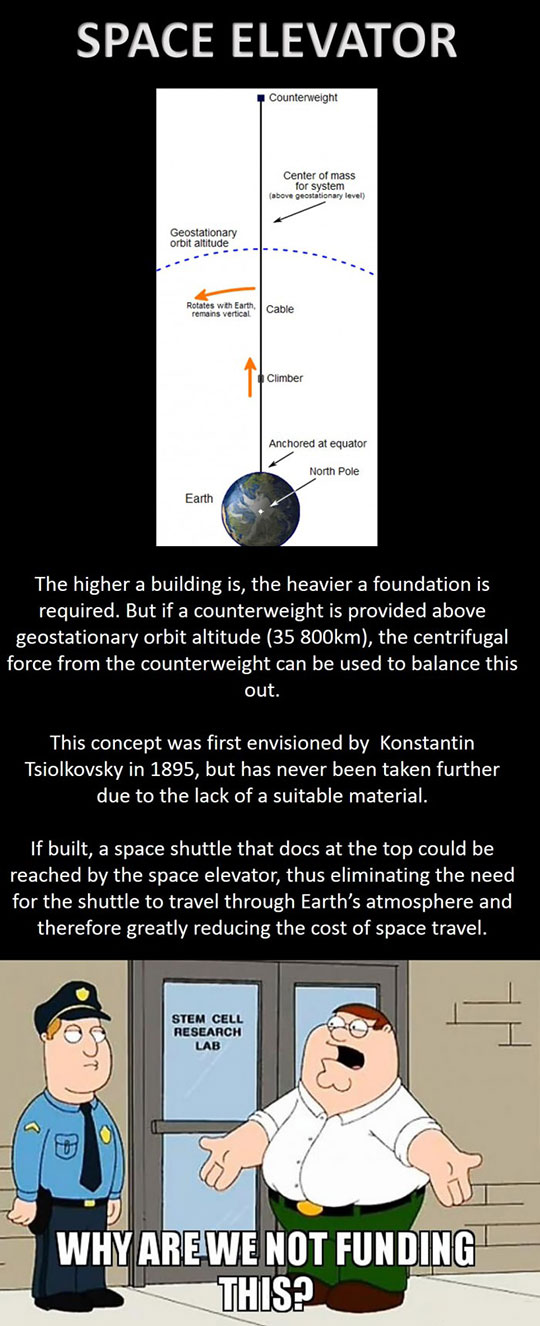
The idea to build a space elevator was made popular through the science fiction novel “Fountains of Paradise” by Arthur C Clarke. In the meantime former NASA members, different scientists and amateur space enthusiasts actually work on this idea. And that’s the vision: The space elevator consists of an anchored platform in the sea, a counterweight in space and a ribbon, which connects both. Due to the rotation of the earth, the ribbon is hold tight through the centrifugal force. Along it, elevator climbers climb up. In an approximate height of 36.000km, in the geostationary orbit, a space station is erected. From there, it is possible to reach even further into space. The elevator itself is fed with energy through a gigantic laser from the ground. It transports goods and also passengers much cheaper and safer than is done till now with the Space Shuttle.
A competition for space elevators
To promote the idea of a space elevator to the public and to get as many people as possible involved, a competition was founded in 2005: the Space Elevator Games. The American space agency NASA donated the prize money. Since then, every year hobbyists and student groups from all over the world meet in New Mexico or Utah and let their mini space elevators climb up and down for the bet. The so called “climbers” have to go up along a ribbon and have to be fed only by energy from the ground – for example, through a laser or reflected sunlight. In 2007 there were 20 teams participating. In order to win the prize money of 500.000 dollars, the climbers should have climbed 100 meters within 50 seconds. However, this wasn’t accomplished by anyone yet. For the next games in autumn 2008, the conditions were even raised further: A distance of one kilometre has to be handled.
A group of German students has also set the goal to participate in this competition. 25 engineering and physics students from the Technical University of Munich have started to construct an own space elevator a year ago. For the energy transmission, they count on microwaves. Lasers were not effective enough for them. But to send the climber a kilometre high into the air, they need an emitter with a diameter of 30 meters. They are not able to finance this at the moment. If they actually participate in the competition one day depends also on possible sponsors.
Carbon atoms as the hope
The space elevator is already thought through by the planners into detail. For the many technical details, the visionaries have already found solutions. So the development of the machine which climbs along the ribbon into space should, with all the difficulties involved, only be a matter of time. The biggest problem is the proper material for the ribbon. It has to be enormously stable and insensitive against outer influences. Such a material doesn’t exist so far. Steel would be destroyed through its own weight. The hope lies on carbon atoms. It is known since a long time that they form strong connections among each others. In this way diamonds, graphite and Fullerene are formed. Ten years ago it was moreover discovered that carbon atoms also form to tiny tubes. These carbon tubes have an enormous resistance, are much more stable and lighter than steel. They even exceed the resistance of steel about a hundred times. For the planners of the space elevator, this is the optimal material for the elevator ribbon. However, these tubes only have a diameter of a millionth millimetre and a length of a thousandth millimetre. So far, there are no tools in the nano world to produce long ribbons out of them. Least of all, if these ribbons should be thousands of kilometres long. If they have the wished properties then at all is also uncertain.
From dream to reality
At the moment, nobody knows if there will ever be a space elevator. Optimists, like the former NASA advisor Brad Edwards, who has committed himself to this idea, believe that they will experience it themselves. They dream of a chain of interconnected space stations and of the conquest of the near planets. Yet everything seems unbelievable but there were other visions which made their way. The author Arthur C Clarke had an idea in his novel about the space elevator, which also many thought was incredible: communication with the help of satellites. This was in 1945.”
I hope they are successful in competing for several reasons:
- We need and want input from the Europeans - they and their ESA could play a vital role in constructing a future elevator
- We’ve never had a successful microwave-powered climb in the Games - it would be nice to see one that actually worked
- A 30 meter antenna? That would be uber-cool.
Let’s hope that their planning and search for a sponsor is successful. Incidentally, if you haven’t watched that Quarks TV show yet, treat yourself and do it. Even if you don’t speak German, what they are doing is very clear and understandable. The show is well put together and they use many graphics/animations which I think are new.
March 26th, 2008